Welcome to Clay, Coffee & Conversation, a regular interview series created by Zoe of Loopline Ceramics. Each interview is an opportunity to get to know a different maker, hear their story, and discover the experiences behind their pottery.
Before finding pottery, Zoe spent 30 years working as a Police Detective. Her curiosity, love of people, and years of interviewing experience inspired her to create a series of conversations that explores the people behind the pots. Through Clay, Coffee & Conversation, she shares the insights, inspirations, and creative journeys of makers from across the pottery community. We’ll be featuring one of her interviews each month, here on the Hartley & Noble Blog.
In this interview, Zoe chats with ceramic artist Ella Bua-In, whose beautifully illustrated stoneware pieces are inspired by the landscapes, wildlife, and stories of Wales. From her background in fine art to her love of oxide painting, favourite studio tools, and balancing pottery with family life, Ella offers a fascinating glimpse into her creative world.
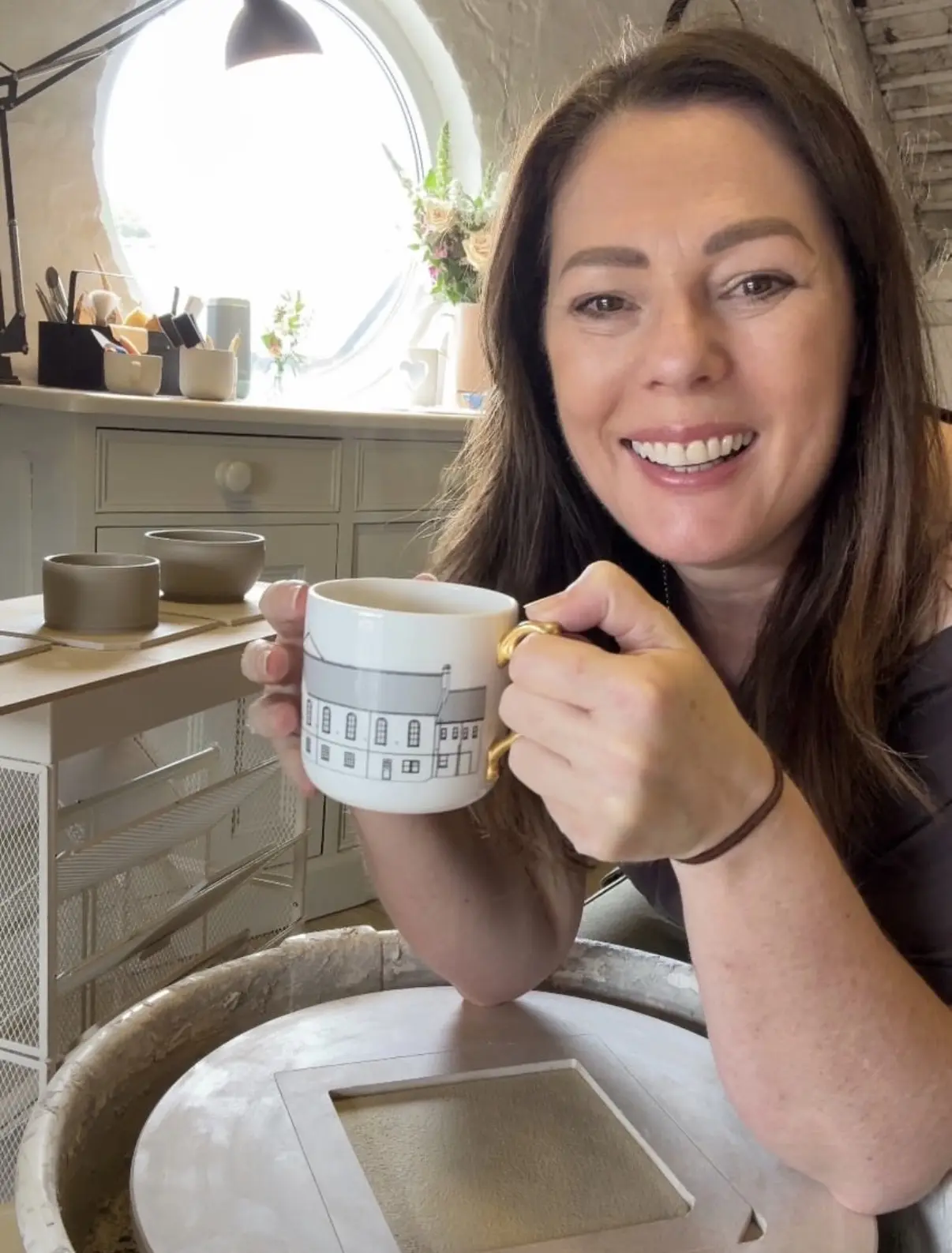
1. You live with your family in Cardigan, West Wales, did you grow up and attend school in the local area, or move there later in life?
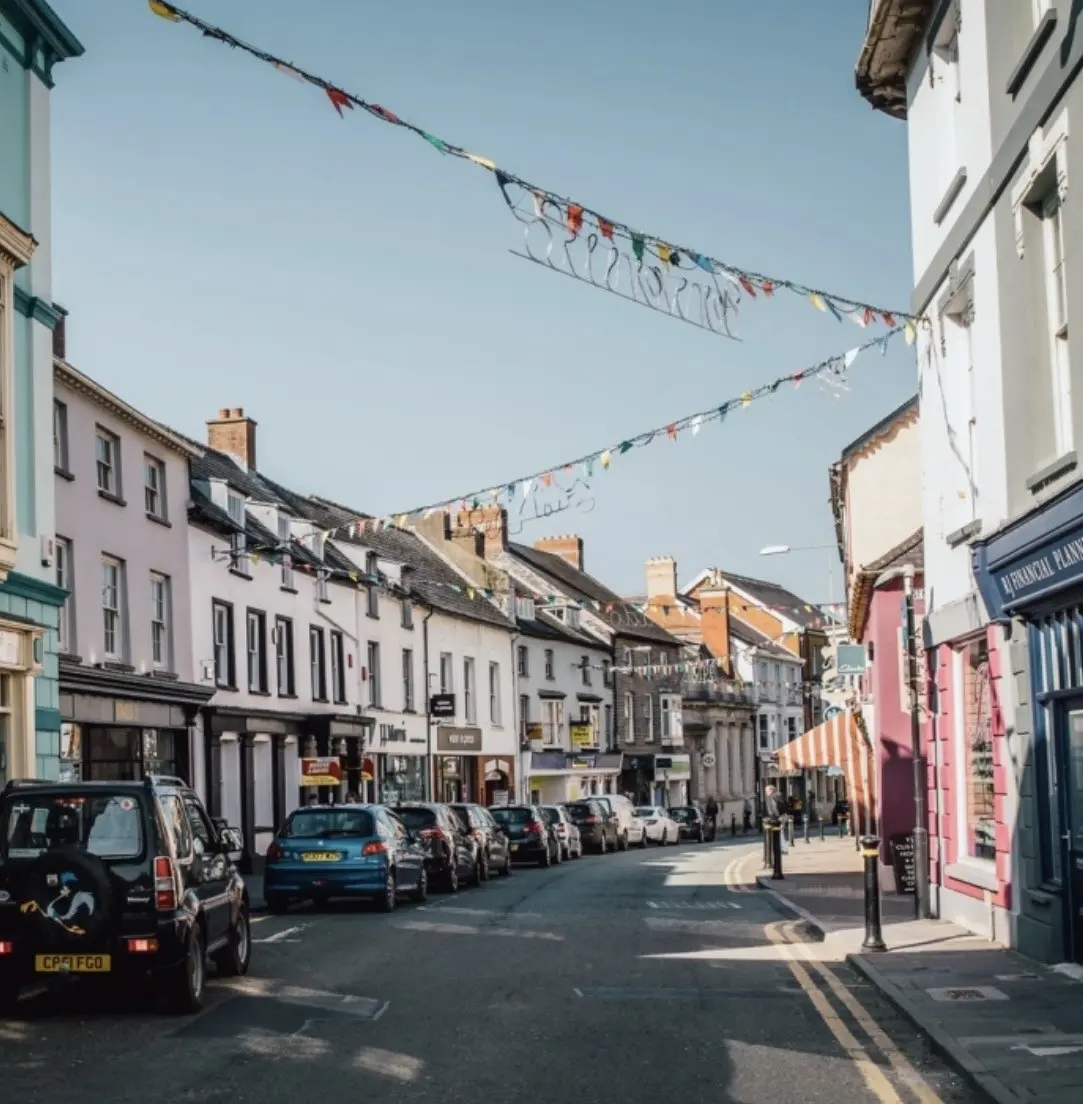
We moved to Cardigan three years ago after living in Aberystwyth for a couple of years, and Margate for a couple of years before that. Prior to that, we had lived in London for a long time. When we decided to leave London, we didn’t have a particular destination in mind, and we were just looking for somewhere affordable that suited us. Finally, we’ve found that in Cardigan which we really love! Wales as a country has a very strong sense of identity and history, and Cardigan as a town has a great sense of community spirit, with so much land and nature on your doorstep.
2. Your history is in fine art, what drew you to ceramics and how did you find the transition from using oil paints to clay oxides?
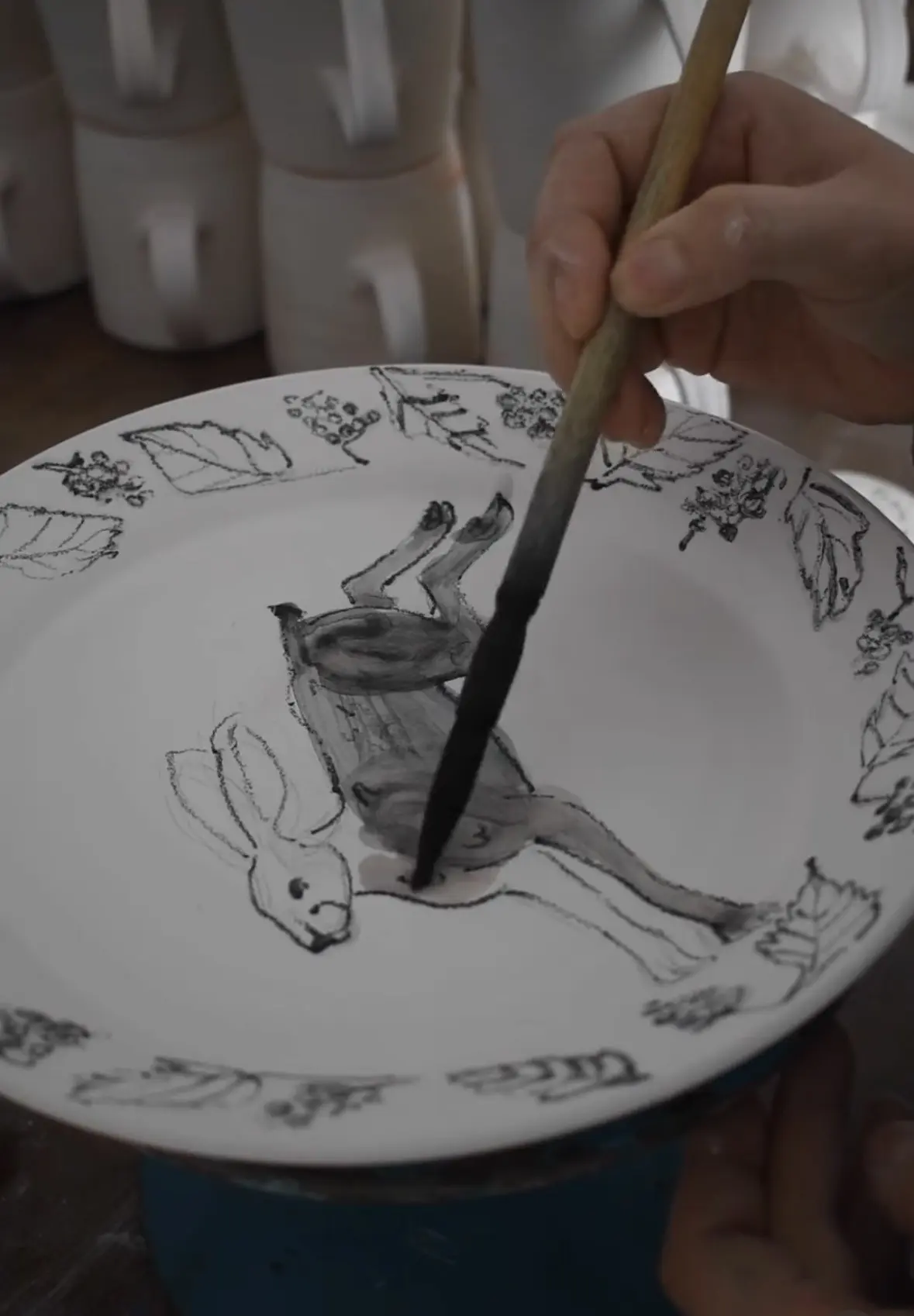
By the time I graduated from my BA, I had decided that the fine art world wasn’t for me. I wanted to find a way to work creatively that didn’t feel so exclusive and was more accessible for day-to-day life. I joined a pottery studio in London and haven’t stopped since then. I’ve always used oil paints and oxides very differently though; when I was painting, I worked on large abstract canvases with lots of scraping back and layering involved. Now, with oxides, it is much more a case of the first line being the only line! I don’t think I found the transition difficult as there has always been this difference. Working with oxides in the way that I do has meant that I am more confident in my drawing skills than I have ever been before.
3. The videos of you painting are compulsive viewing and so satisfying to watch! How important is the use of social media to show your creative designs?
Unfortunately, it’s very important! The side of social media where you are there to share your work, and discover new makers is wonderful, but the pressures of being able to make the right type of content to be ‘relevant’ on the site are exhausting and just a whole other job. I think I have found a happy medium where I try not to worry about it too much though and am just aware of times in my schedule when I have an upcoming sale or event that means I need to be more present online. I do enjoy making videos/reels, but I will usually spend far too much time on them!
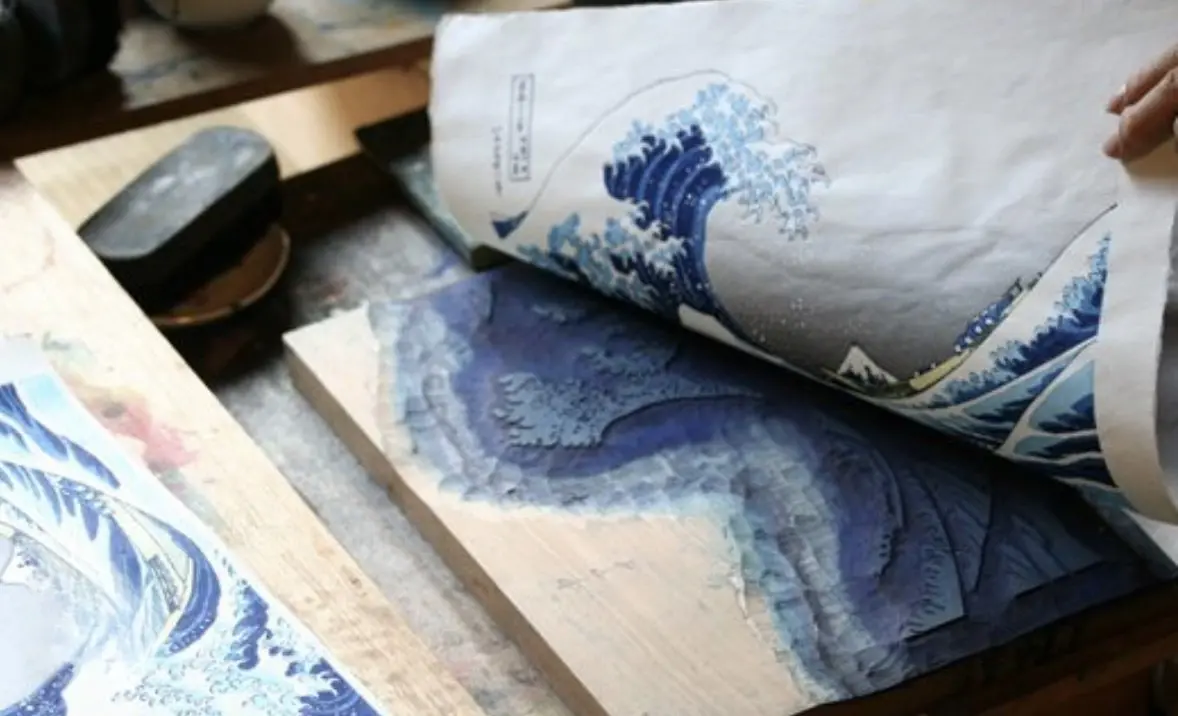
4. Some of your inspiration comes from Japanese paintings and woodblock prints. I understand there are long-standing cultural bonds between Wales and Japan, is it somewhere you have visited or would like to visit one day?
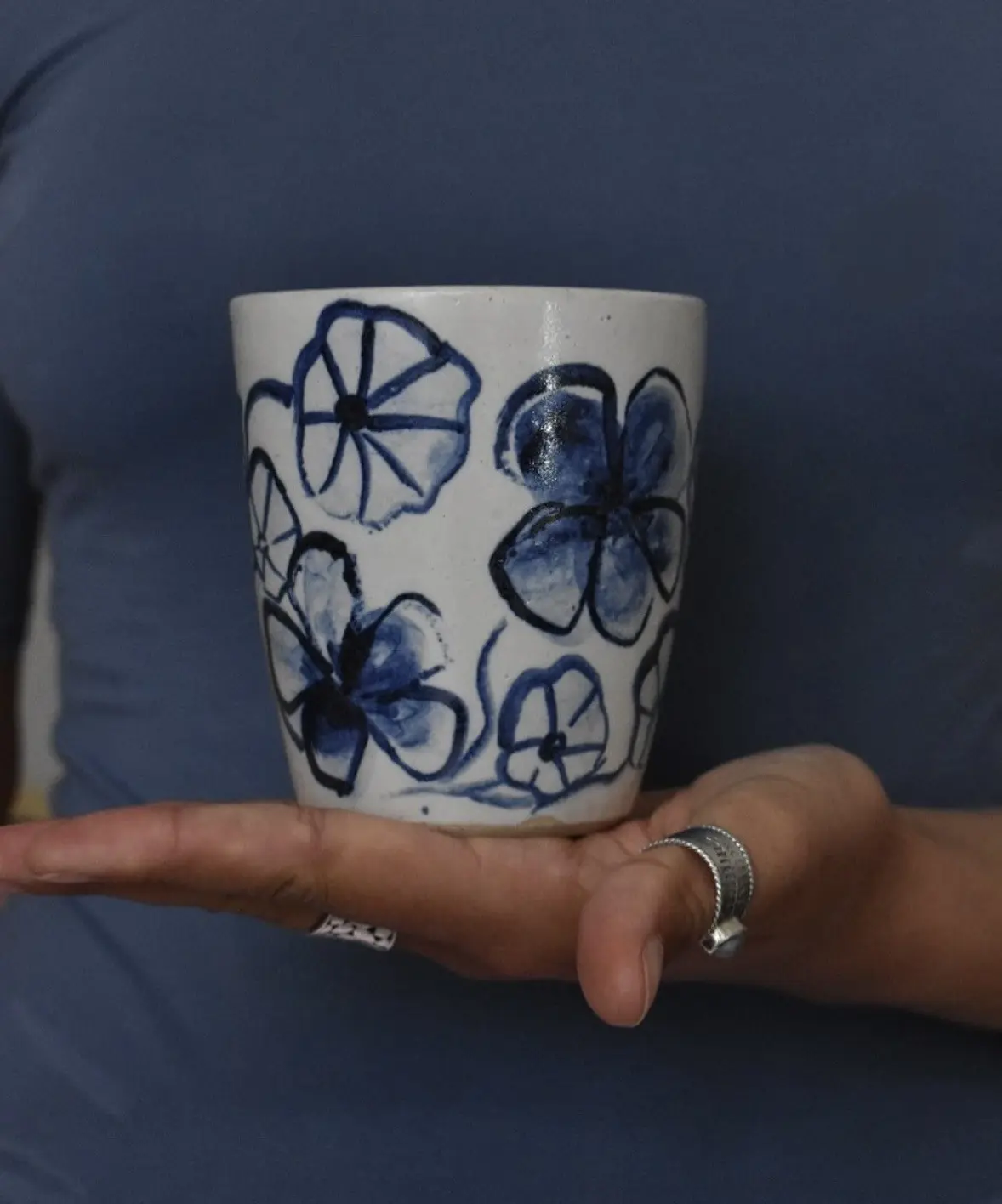
I haven’t visited Japan, but I would love to and have always wanted to! Having small children makes nearly everything in life a bit trickier so it is unlikely to be a trip we take in the next few years, but you never know. My one international stockist is Cymry Japan in Hiroshima and working with them over the last year or so has reignited my desire to make the trip. I think what draws me to take inspiration from traditional Japanese woodblock prints in particular is the sense of realism and life they manage to capture whilst still being very stylised and unique.
5. Like me, you use stoneware clay. What qualities do you like about this type of clay, and have you experimented with other types?
I’ve only ever used stoneware, and this is partly because I am too lazy to deep clean my wheel in order to regularly work with other types of clay! I have tried out lots of different types of stoneware though, and I do like that versatility within stoneware as a clay body. For throwing, I am now using an off-white stoneware which makes the best canvas for illustrating onto glaze and as well as illustrating directly onto bisc fired clay. I am also keen on a groggy, more textured stoneware clay though- I try to always have a couple of bags lying around for hand-building.
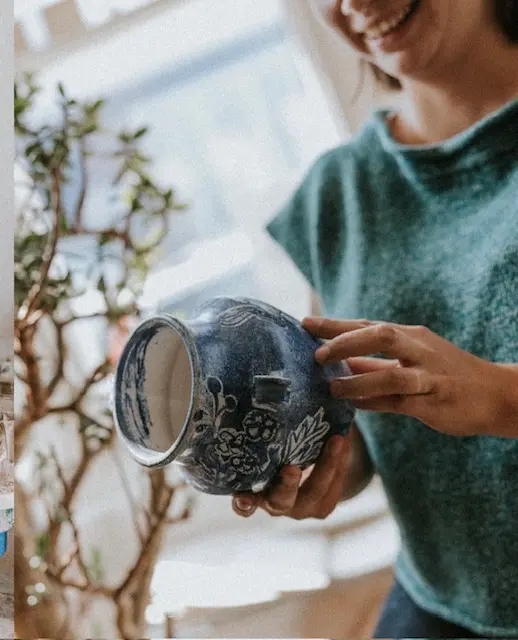
6. I especially love your blackbird mugs; I’m intrigued by the ease of your brushstrokes and the paintbrushes you use to apply the oxides. Tell me about your favourite tools.
I have two paintbrushes that I use the most, a sumi brush and a fine watercolour brush. I also use wide, hake brushes when needed. My brushes are probably my favourite tools though I do like a wire-loop trimming tool as well, trimming on the whole can be very satisfying when the clay is exactly right.
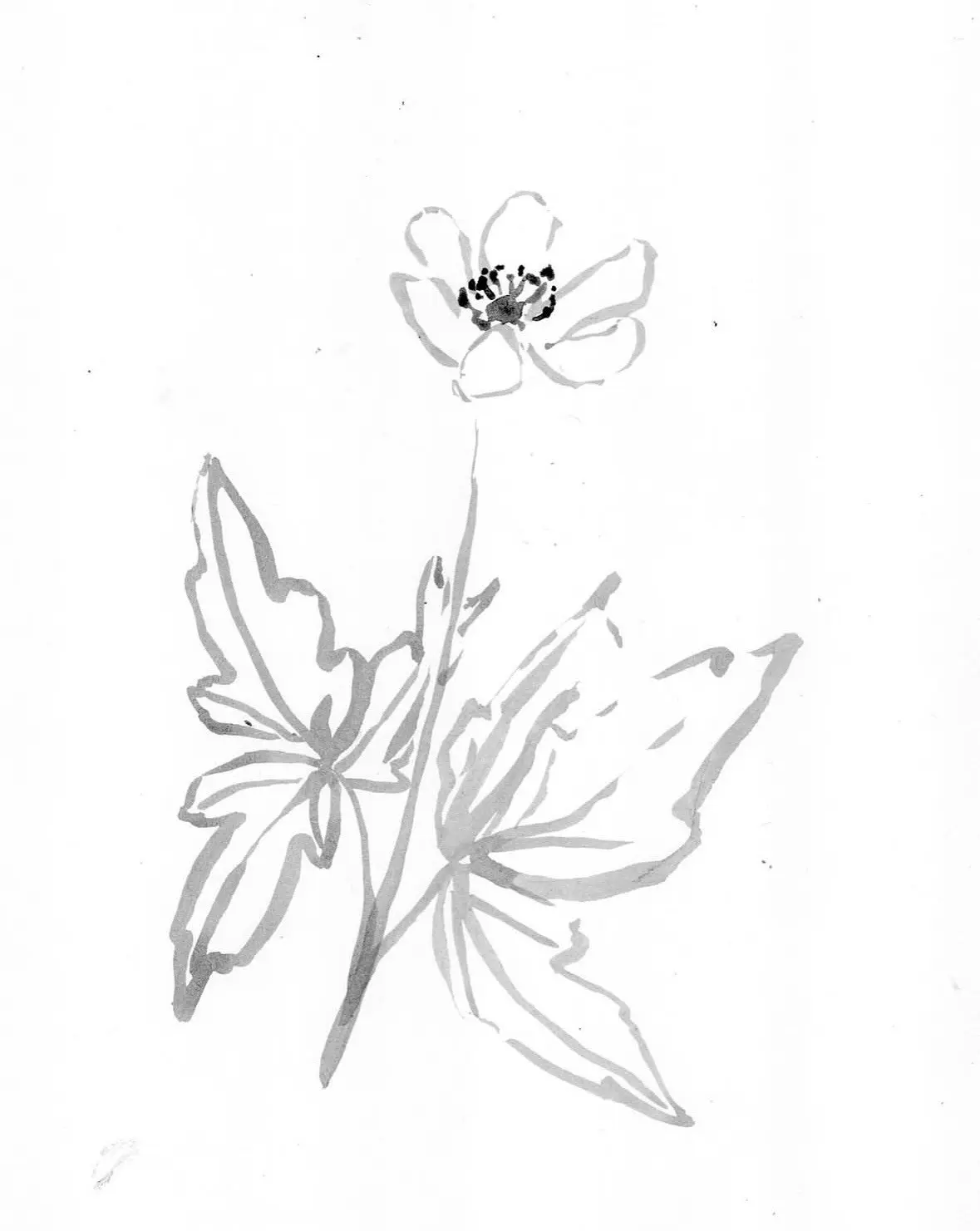
7. Your work was recently featured at Klei – Independent Shop and Gallery in London, in a series called ‘Letters from the West’. How did you become involved and what inspired your collection.
Skye, who founded and runs Klei, got in touch with me a while ago and asked if it was something I’d be interested in- of course I said yes immediately! I wanted there to be a tangible story and link between all the pieces, not only so that they worked visually but also to help with the research stage of designing, and I landed on our home here in West Wales. The pieces were a mix of designs inspired by the Welsh landscape and flora/fauna, as well as stories from Welsh mythology.
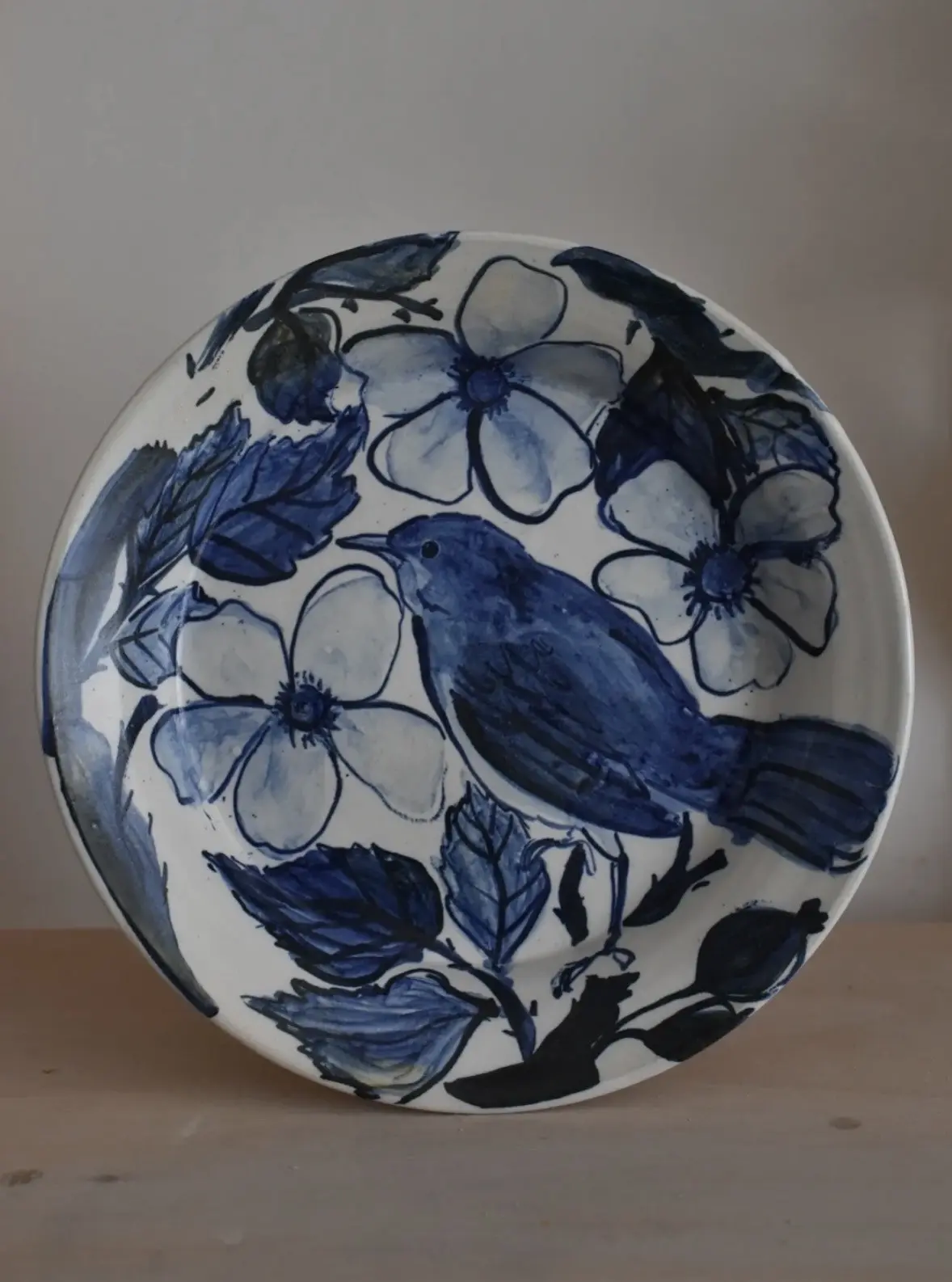
8. I love hearing about potters’ workspaces. What key things make your home studio an inspirational space to work?
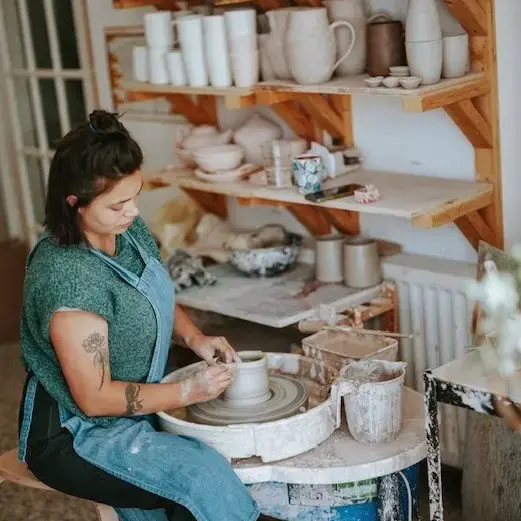
I am lucky enough to work in a room with a lot of natural light and somewhere I can make feel like my own, comfortable to me (a bit disorganised with lots of bits everywhere!). The main benefit of a home studio for me though is that it is accessible at all hours of the day- which is pretty important when trying to squeeze in work hours around a four and two year old!